
Defensive Mastery: How to Escape the Most Effective Jiu-Jitsu Positions
Brazilian Jiu-Jitsu is fundamentally built on the ability to survive under extreme pressure. While everyone loves to attack, your progress depends entirely on your defensive capabilities. A strong defense provides the confidence needed to take risks during offensive movements. Consequently, knowing how to neutralize the most effective positions is a non-negotiable skill for any grappler. This comprehensive guide details the best strategies for escaping the Back Mount, Full Mount, Side Control, and more. By mastering these escapes, you ensure your longevity on the mat and enhance your overall martial arts skills. Discover the essential techniques required to turn a desperate situation into a successful reversal.
brazilian jiu jitsu in research forest
1. The Survival Mindset: Posture and Patience
Before learning specific technical movements, you must cultivate a resilient defensive mindset. Defense in BJJ is not about frantic movement or explosive panic. Instead, it relies on structured posture and calculated patience.
Maintaining Structural Integrity
When you are trapped in a bottom position, your primary goal is to protect your neck and joints. You must keep your elbows tight to your ribs to prevent underhooks and armbars. Simultaneously, you should avoid extending your limbs away from your body. This compact posture makes it significantly harder for an opponent to find an opening for a submission. Therefore, structural integrity is your first line of defense in any self-defense training. Without a solid frame, even the best escape techniques will likely fail.
Staying Calm Under Pressure
Panic is the greatest enemy of effective defense. When you feel the weight of an opponent, your natural instinct might be to thrash around. However, this explosive movement only drains your energy and creates openings for the attacker. You must focus on deep, controlled breathing to maintain mental clarity. This composure allows you to recognize the exact moment your opponent transitions. Consequently, you can time your escape with maximum efficiency. This mental fortitude is a cornerstone of building strong character on the mats.
2. Escaping the Back Mount: The High-Stakes Battle
The Back Mount is widely considered the most dangerous position in grappling. From here, your opponent has full access to your neck while remaining invisible to your sight. Successfully defending this position requires immediate action and precise hand placement.
Prioritizing Neck Protection
The moment an opponent takes your back, you must protect your neck. Use a “two-on-one” grip to control their primary choking arm. Specifically, grab their wrist with one hand and their forearm with the other. This prevents them from sliding their arm under your chin for a Rear Naked Choke. Furthermore, keep your chin tucked firmly against your chest to minimize the available space. This defensive posture is a vital component of our BJJ curriculum.
Clearing the Hooks and Sliding to Safety
To fully escape the back, you must address the opponent’s legs, known as the “hooks.” Use your hips and hands to clear at least one hook from your waist. Once the hook is cleared, you should slide your hips over their leg and toward the floor. Simultaneously, you must move your head to the opposite side of their head. This prevents them from maintaining the “seatbelt” control. By placing your back on the mat, you effectively neutralize the position. You will often end up inside the opponent’s guard, ready to begin your own fitness training program of offensive passing.
3. Neutralizing the Full Mount: Bridging and Shrimping
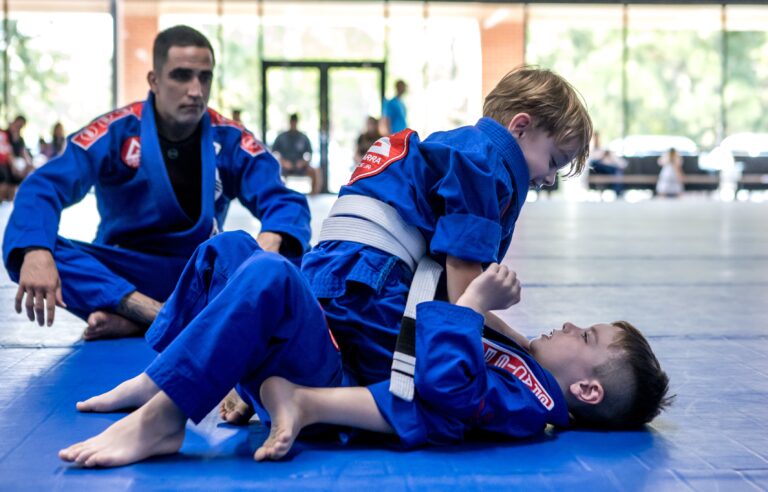
Being pinned in the Full Mount is physically exhausting and mentally taxing. To escape, you must combine explosive hip movement with technical framing.
The Trap and Roll (Upa) Escape
The “Upa” is a fundamental escape that every beginner must master. It involves trapping one of the opponent’s arms and the corresponding leg on the same side. Once you neutralize their ability to “post” their limb, you execute a powerful diagonal bridge over your shoulder. This explosive movement uses your hips to roll the opponent directly onto their back. This technique is highly effective when the opponent is sitting low on your hips. It remains a staple in our self-defense programs.
The Elbow-Knee Escape
If the opponent is sitting high or has a wide base, the elbow-knee escape is the preferred choice. You must use your elbows to create a frame against the opponent’s inner thigh. Simultaneously, turn onto your side and use a “shrimp” movement to create space. This allows you to slide your knee through the gap and recover your guard. This escape requires precision and timing rather than brute strength. Consequently, it is an essential part of BJJ training today for smaller practitioners.
4. Surviving Side Control: Frames and Underhooks
Side control is a common position where the opponent exerts heavy chest-to-chest pressure. Escaping requires you to create space and prevent the opponent from flattening you out.
Establishing Defensive Frames
You must never let an opponent settle their full weight directly on your chest. Immediately establish frames using your forearms against the opponent’s neck and hips. These frames act like pillars, preventing them from closing the distance. Moreover, frames allow you to breathe more easily under the weight of a larger attacker. This structural defense is a key element of martial arts skills development.
Shrimping and Recovering the Guard
Once your frames are in place, you must move your hips. Execute a sharp hip heist or “shrimp” away from the opponent to create a pocket of space. This space provides the room needed to bring your inside knee back into the fight. By connecting your knee to your elbow, you effectively block the opponent’s path. You can then transition back to a full or half guard. This consistent movement is vital for long-term physical well-being and preventing injuries.
5. Defending the Knee on Belly: Strategic Displacement
The Knee on Belly is designed to create intense discomfort and force the defender to make mistakes. To survive, you must avoid pushing directly on the opponent’s knee with your hands.
Pushing the Hip and Moving the Hips
Instead of pushing the knee—which leads to armbars—focus on the opponent’s hip and ankle. Use your hand to guide their knee off your stomach while simultaneously shrimping your hips away. This displacement forces the opponent to lose their balance or transition to a different position. Moreover, you must remain active and avoid staying flat on your back. Constant hip movement makes it impossible for the attacker to settle their weight. This dynamic defense is taught throughout our curriculum and schedule.
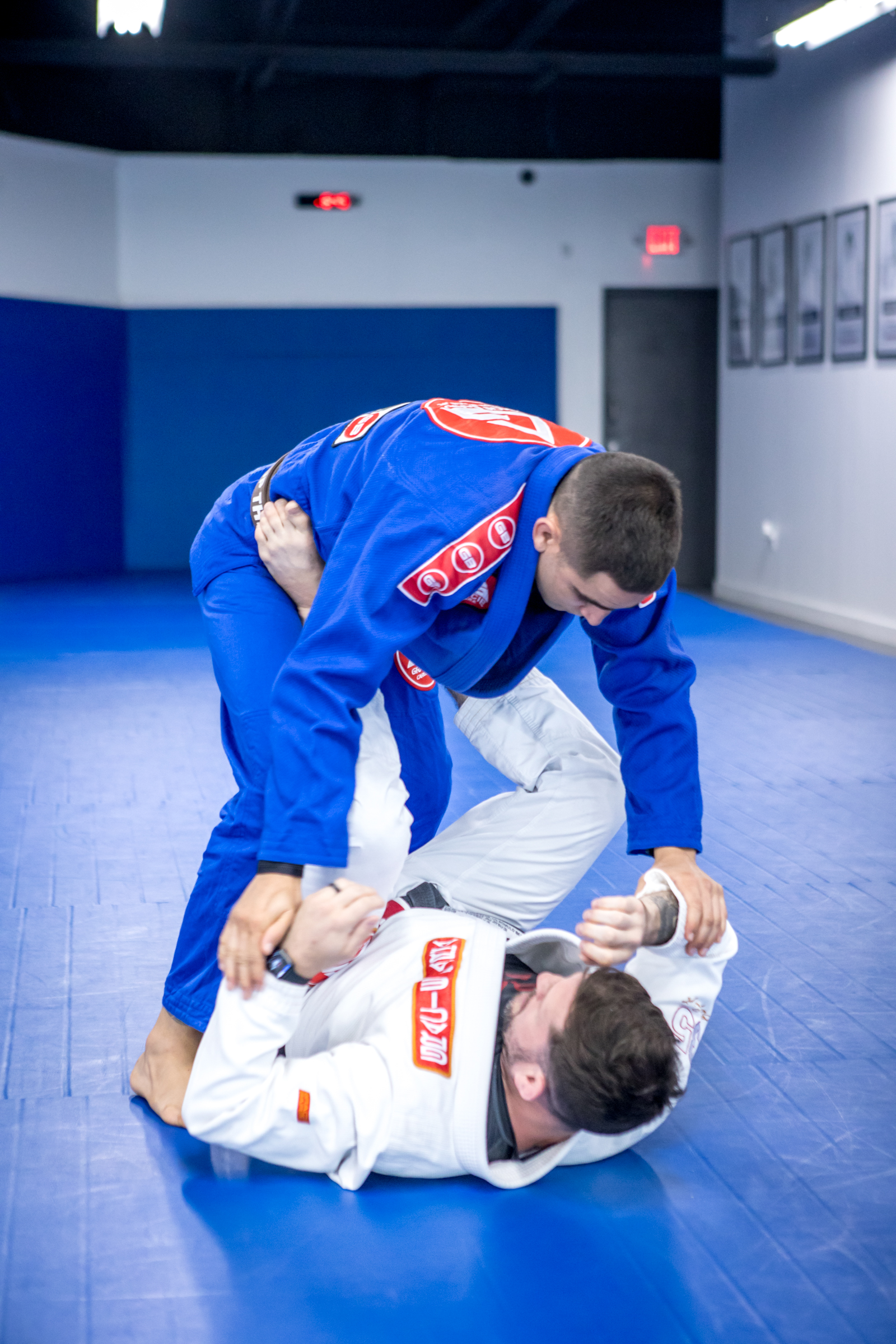
Transitioning to the Underhook
Another effective defense involves seeking an underhook on the opponent’s far side. By securing an underhook, you can sit up and drive into the opponent, potentially leading to a sweep or a stand-up. This proactive approach turns a defensive situation into a wrestling scramble. It requires timing and a solid understanding of leverage. Therefore, mastering the underhook is essential for excellence in self-defense.
Elevate Your Defense at GB Research Forest
Defense is the bedrock upon which all great Jiu-Jitsu is built. By mastering the escapes from the most effective positions, you become a frustrating and difficult opponent to beat. This technical proficiency ensures that you can handle any situation, whether in a sporting competition or a real-life encounter. The journey to defensive mastery requires dedication, repetition, and a supportive community.
brazilian jiu jitsu in research forest
Are you ready to build an impenetrable defense and transform your grappling game? GB Research Forest provides a professional and safe environment to learn the most effective BJJ techniques. Whether you are a beginner or an advanced student, our programs are designed to help you succeed. Visit our website today to explore our classes and book your introductory session: Join Our Defensive Mastery Program